
Why "One-Size-Fits-All" Visual Deterrents Fail: The Science Behind Pulsating Lights for Bird Strike Mitigation
With rising concerns over bird strikes in aviation, more airports and airlines deploy visual deterrents, especially pulsating lights. But new research shows that effectiveness depends critically on matching the spectral and temporal properties to the targeted bird species. This article explores how vision biology, flicker frequency, and color sensitivity shape the success—or failure—of these mitigation systems and examines practical field-tested approaches for real-world results.
MITIGATION STRATEGIES AND TECHNOLOGIES
Waleed MAHROUS
11/24/20253 min read
Introduction: The Promise and Pitfalls of Visual Deterrence
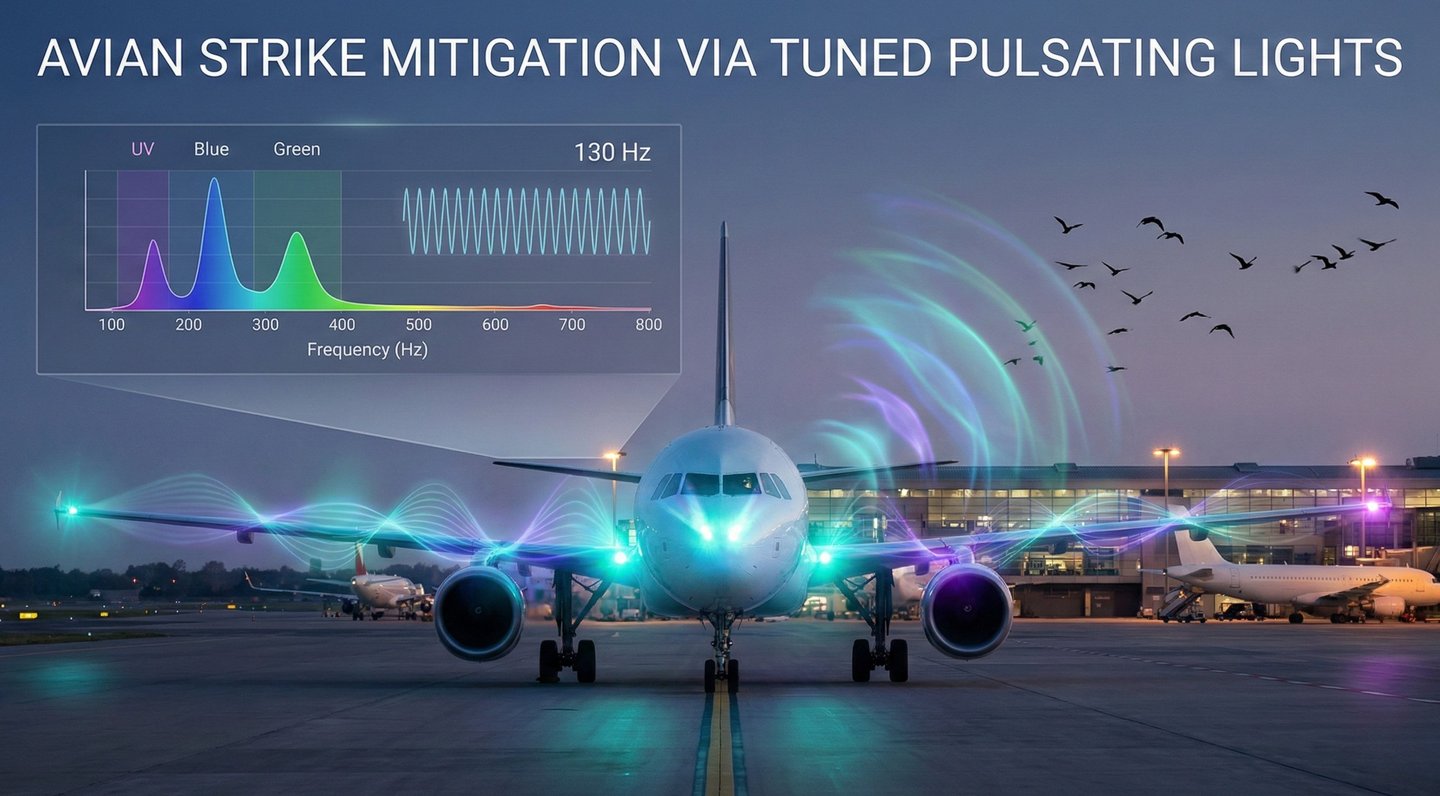
More aircraft and airports are investing in brightly lit, pulsating, or stroboscopic visual warning systems to help prevent bird strikes. But not all lights are created equal, and for many bird species, the wrong light can be ignored or even attract them. Getting visual deterrence right means building systems around bird biology, not human convenience.
The Science of Light Perception in Birds
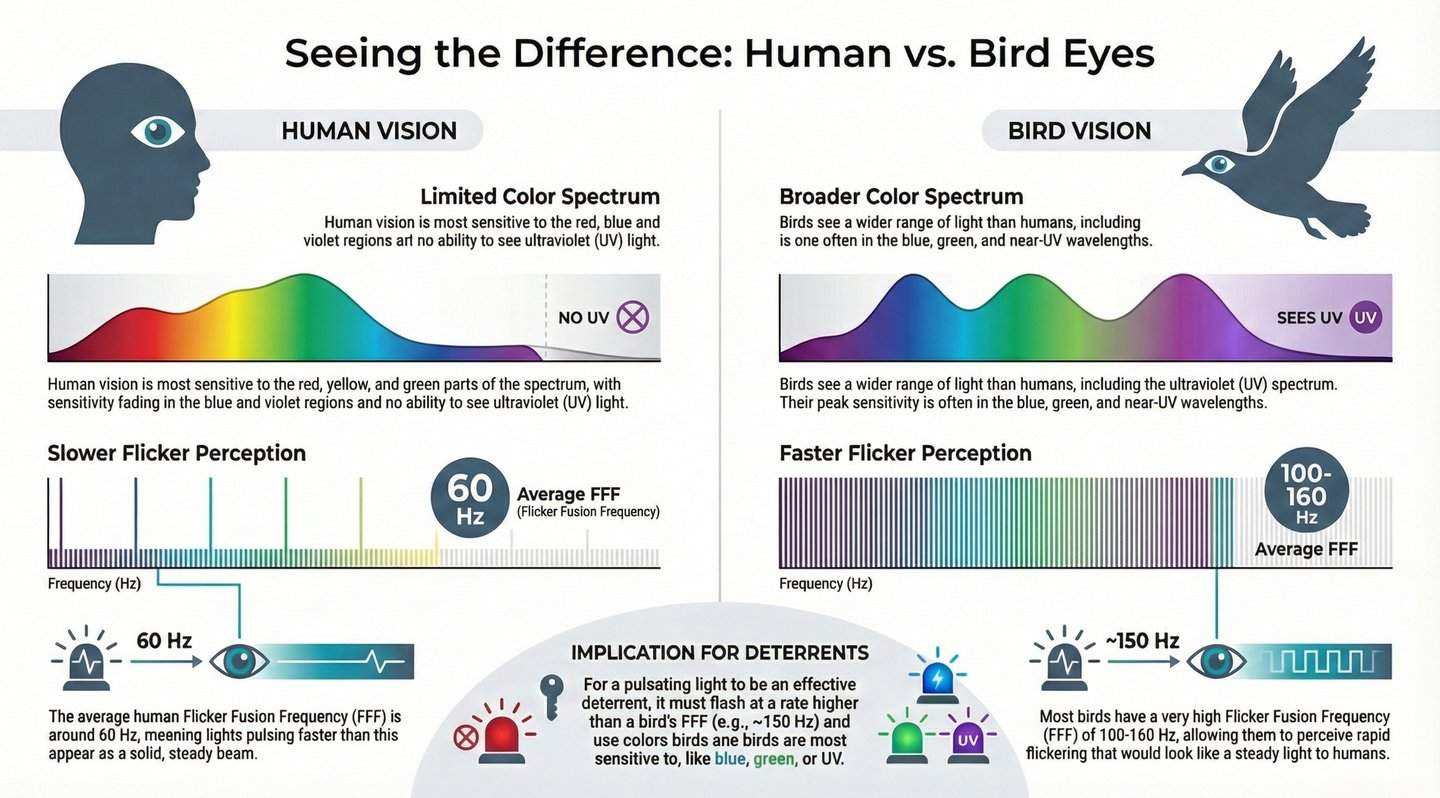
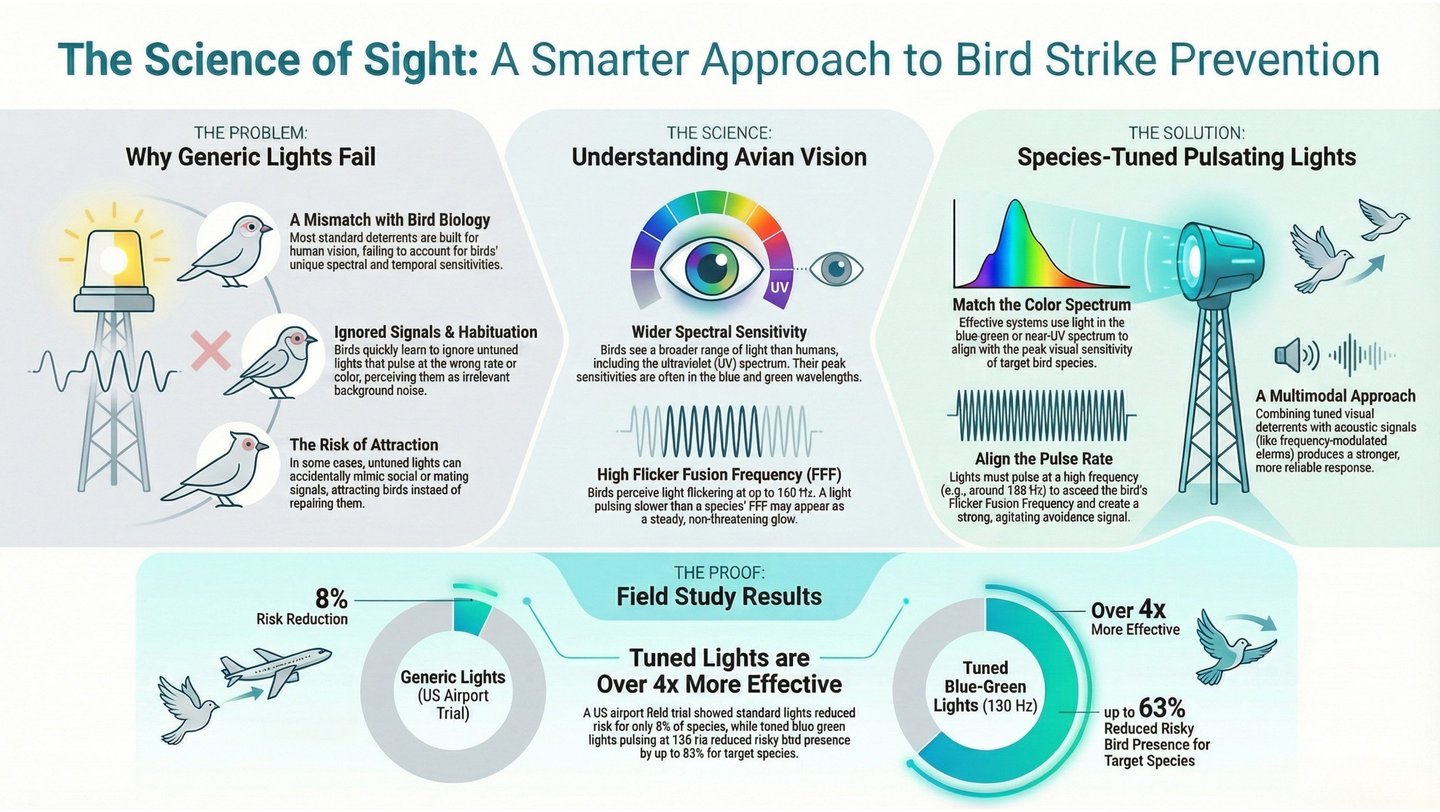
Spectral Sensitivity: Birds generally see a broader range of light than humans, including ultraviolet; their peak sensitivities often differ greatly from ours. For effective avoidance, deterrent lights must emit at wavelengths to which birds are most sensitive, typically blue, green, or near-UV.
Flicker Fusion Frequency (FFF): Most birds perceive flickering light at much higher rates than humans, with FFFs from 100–160 Hz. If a light pulses below this rate, the flicker is either not recognized or appears as a steady glow, resulting in poor deterrence.
Why "Untuned" Lights Fail, and Sometimes Backfire
Behavioral Habituation: Birds can become accustomed to repeated or irrelevant visual stimuli, especially those not tuned to their biology. In rare cases, lights may accidentally mimic social or mating signals, attracting flocks instead of repelling them.
Field Research: Studies on cowbirds and cockatoos show much stronger avoidance when visual cues match the target species’ color vision and pulse sensitivity. Random pulsing or universal settings fail to account for differences in species’ nervous systems.
Multimodal and Adaptive Deterrents: What Works
Adaptive Pulse and Color: Effective systems use adjustable pulse rates and color to target specific local species, verified by on-the-ground ornithological data.
Integration with Acoustic Signals: Combining species-tuned lights with sound (e.g., frequency-modulated alarms) gives stronger, less habituated reactions.
Regular Field Testing: Ongoing monitoring with radar, wildlife cameras, and statistical analysis ensures deterrent systems remain effective rather than fading into background noise.
Case Study: Pulsating Light Deployment at Airports
A recent field trial at a US airport installed both standard and bird-tuned pulsing lights. Results showed:
The standard lights decreased the risk for only 8% of strike-prone species.
Species-specific lights with blue-green pulses at 130 Hz reduced risky bird presence by up to 63% for five target species, a fourfold improvement.
Practical Recommendations
Always consult ornithologists before selecting deterrent spectra and pulse rates.
Choose systems offering variable and programmable settings for adaptive deployment.
Test effectiveness with real flight data and bird movement analysis.
Combine with habitat management and acoustic hazing for best results.
Conclusion
Visual deterrents can dramatically improve aviation safety if they’re designed for birds and not just for regulatory compliance or human aesthetics. Species differences matter. Spectral tuning and flicker matching are key. Evidence-based field deployment is essential.
References:
Cowbird responses to aircraft with lights tuned to their eyes - https://bioone.org/journals/the-condor/volume-117/issue-2/CONDOR-14-157.1/Cowbird-responses-to-aircraft-with-lights-tuned-to-their-eyes/10.1650/CONDOR-14-157.1.full
Avian flicker-fusion threshold reviews - https://en.wikipedia.org/wiki/Flicker_fusion_threshold
Precise Flight Pulselite reports - https://aeroaccess.ebizcdn.com/media/Precise_Flight_Pulselite_for_Bird_Strike_Reduction.pdf
Peer-reviewed summaries and field studies - https://peerj.com/articles/13313
Subscribe to our newsletter and stay up to date on the latest insights.